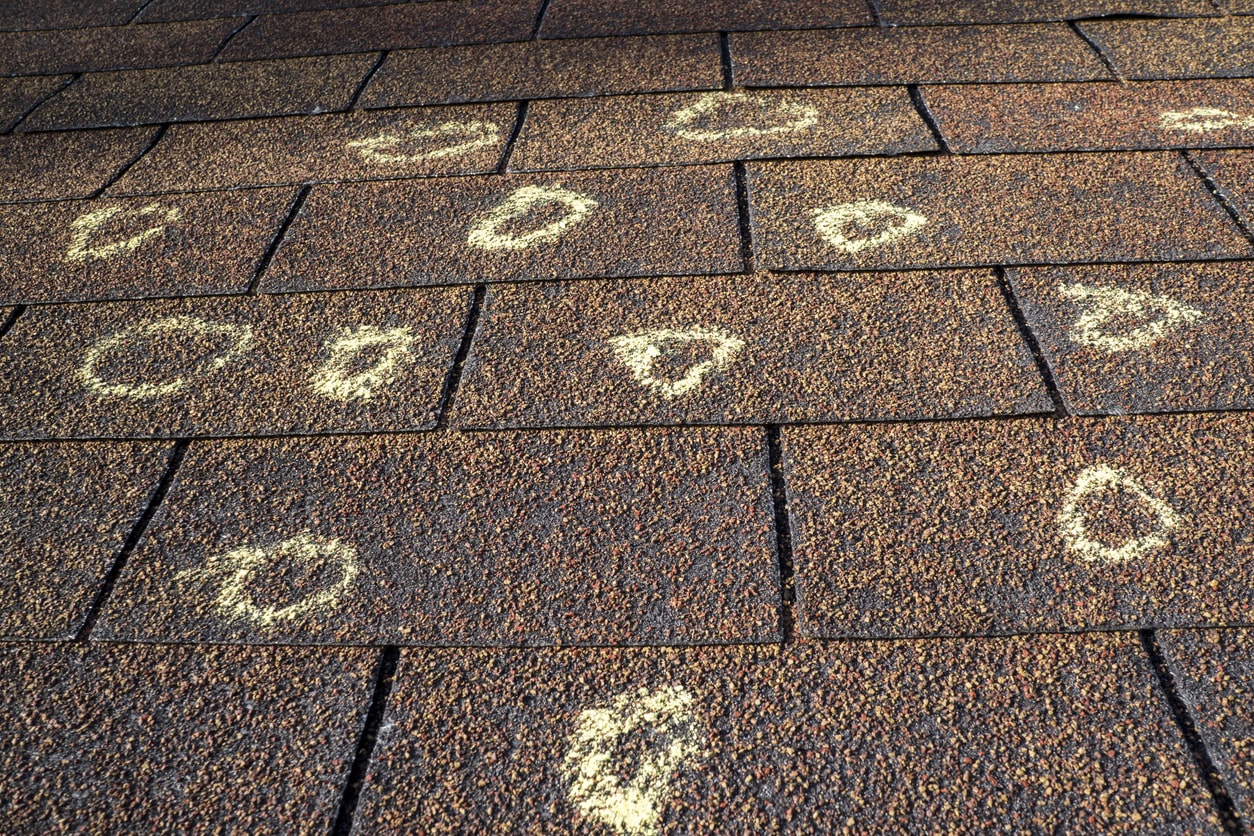
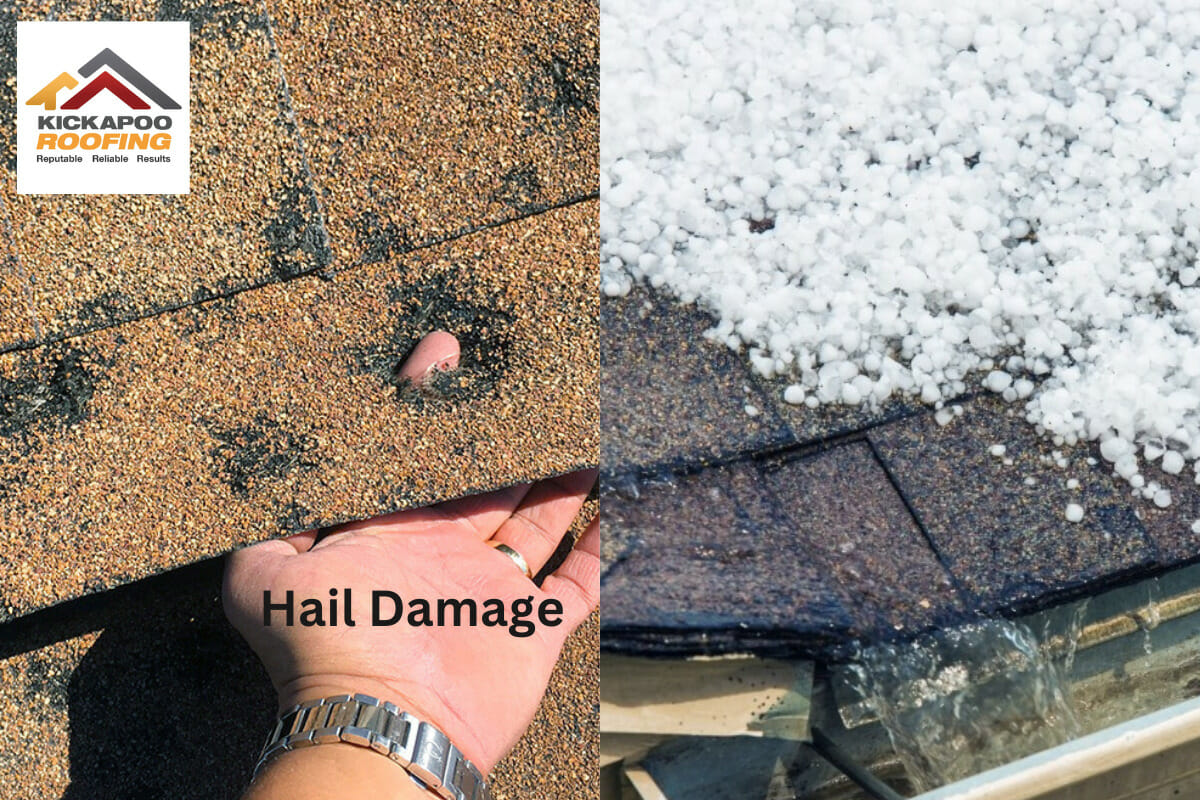
Hail damage does not always announce itself with a leak. Knowing what to look for before calling a professional helps you move quickly after a storm, and speed matters when it comes to protecting your roof from further wear.
A few of these signs are visible from the ground without ever stepping onto the roof, which is exactly where you should stay after a storm. Damaged shingles can be slippery and unstable, and what looks like a stable surface may not be safe. Checking gutters and scanning shingle lines from a safe distance gives you useful information to share when you call for a professional inspection. The sooner damage is confirmed, the better your options are for repair versus a more involved replacement down the road.
Shingle-Specific Repair Matched to Material Type
Asphalt shingles, metal panels, and tile each respond to hail impact differently, and the repair approach has to match the material. Kickapoo Roofing uses methods specific to what your roof is made of, so repairs hold up properly rather than creating new problem areas down the line.
Flashing Resealing Around Vulnerable Roof Gaps
Hail loosens and shifts the flashing around chimneys, vents, and skylights, which are already some of the most leak-prone spots on any roof. Resealing or replacing compromised flashing as part of the repair keeps those areas tight before the next round of wind-driven rain hits.
Gutter Repair and Realignment After Impact
Large hailstones dent, crack, and knock gutters out of alignment, which disrupts drainage and allows water to pool along your roofline. Addressing gutter damage alongside shingle repairs keeps your entire drainage system working the way it should and protects the lower edges of your roof from accelerated wear.
Underlayment Check on Heavily Impacted Areas
When hail is large enough to crack or fracture shingles, the underlayment beneath them can take damage too, and a surface repair alone will not hold if the layer underneath is compromised. Kickapoo Roofing checks underlayment condition in heavily hit areas to make sure your repair addresses the full depth of the damage, not just what is visible on top.
 (608) 352-8688
  schedule consultation