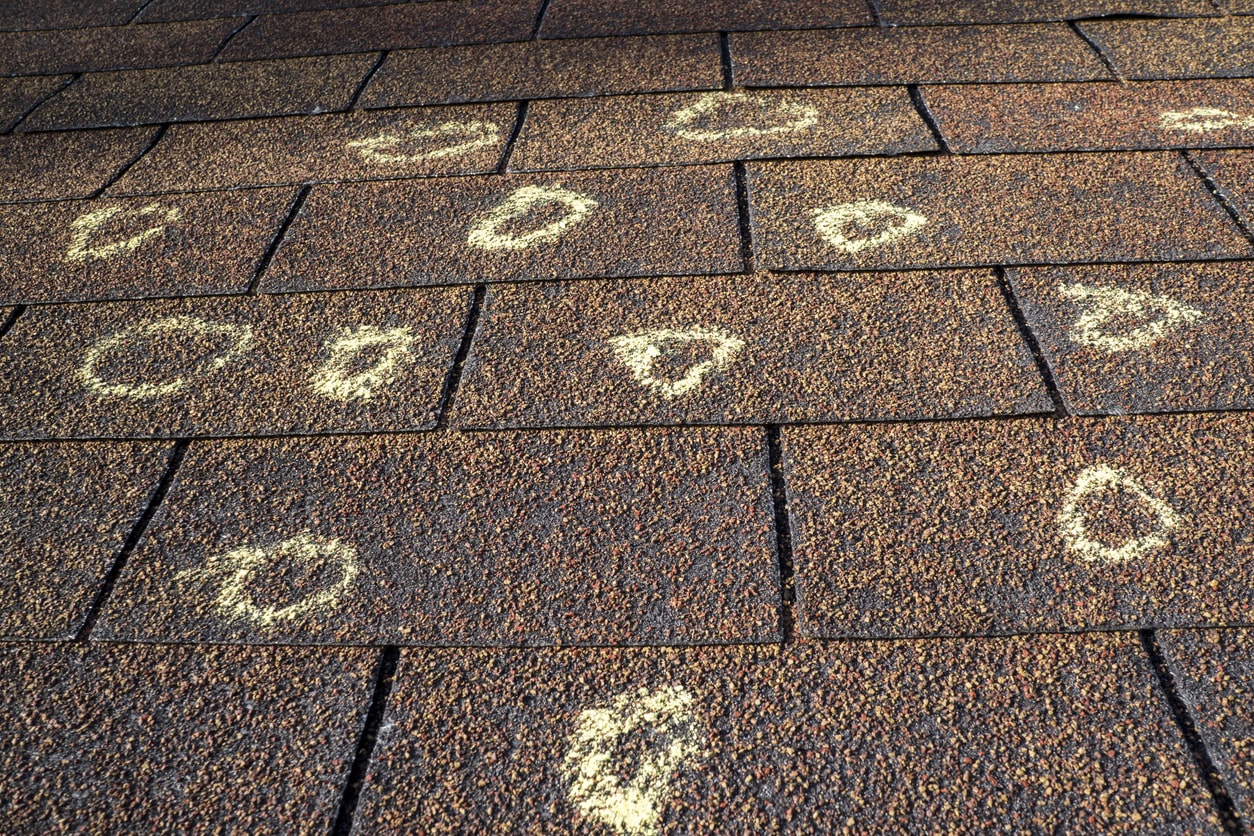
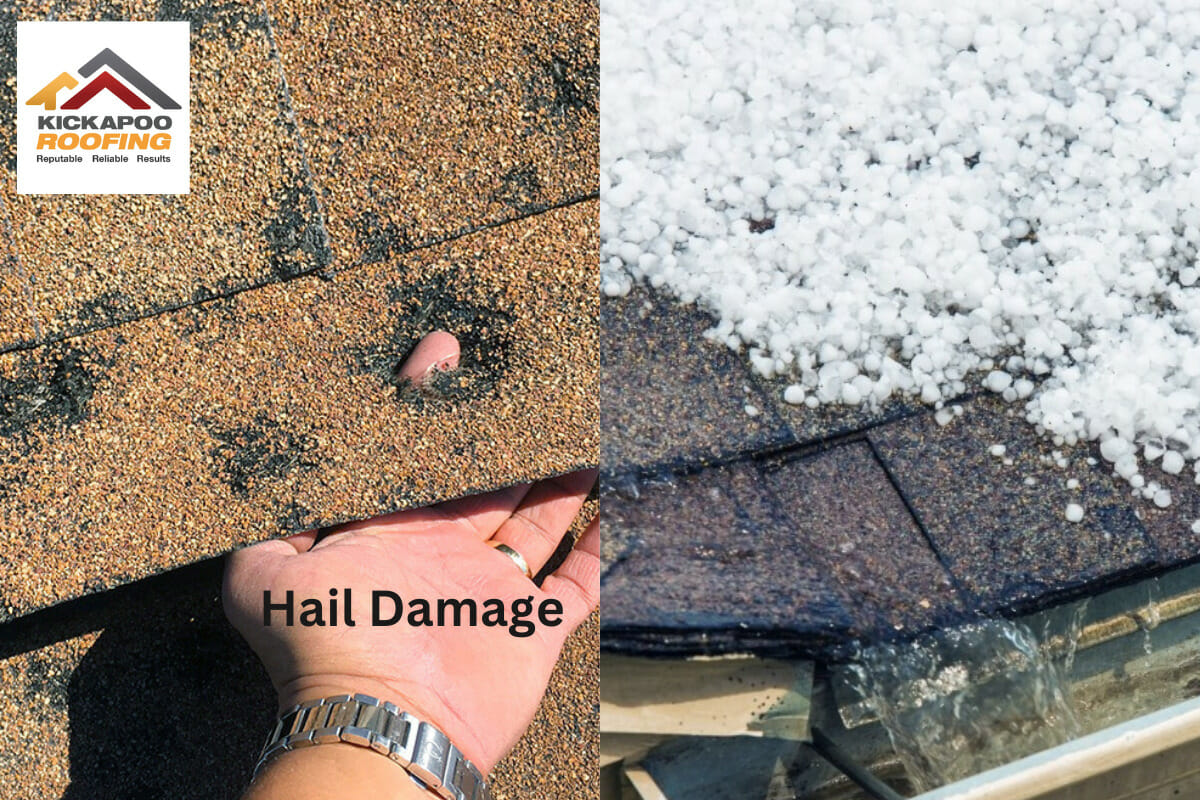
Hail hits asphalt shingles in ways that are easy to miss if you don't know what you're looking for. Understanding the common signs can help you decide whether to call for an inspection right after a storm or wait and risk catching the damage too late in the season.
Older shingles are more likely to show these signs clearly, but newer roofs can still take a serious impact. Getting a roof inspection before fall weather arrives gives you the information you need while repair conditions are still favorable and before temperature changes turn small vulnerabilities into active leaks.
Shingle Replacement With Matched Materials
When damaged shingles are replaced, matching the existing material matters more than it might seem. Mismatched shingles can leave subtle gaps in coverage that show up as leaks after the first heavy rain or freeze, so we take care to fit replacements that work with what's already on your roof.
Flashing Repair and Resealing
Hail and wind often hit flashing hard at the same time they damage shingles, and bent or lifted flashing at valleys, vents, and chimney joints is one of the more common sources of leaks after a storm. Addressing flashing as part of the repair keeps water from finding its way in through seams that look fine from a distance but aren't sealed properly.
Gutter and Edge Damage Repair
Storm damage rarely stops at the shingles. Dented gutters and damaged roof edges affect how water moves off your home, and ignoring them after a hailstorm can lead to overflow, fascia board rot, and pooling that creates its own set of problems over time. We handle related gutter and edge repairs in the same visit, so you're not left with partial storm repairs.
Pre-Winter Repair Timing for Eau Claire Homes
Getting hail repairs done before temperatures drop is especially important in the Chippewa Valley, where fall weather shifts quickly and small vulnerabilities in your roof can turn into active leaks once ice starts forming. Completing repairs while conditions are still workable protects your home through the full winter season rather than leaving a known problem to get worse.
 (608) 352-8688
  schedule consultation