 (608) 352-8688
  schedule consultation
Your home’s siding serves as the first line of defense against the Midwest’s harsh weather conditions. From scorching summer heat to brutal winter storms that are common in Wisconsin, Iowa, and Minnesota, quality siding protects your home while maintaining its appearance. Unfortunately, siding doesn’t last forever, and recognizing the early warning signs of deterioration can save homeowners thousands in potential repairs.
Failing siding often begins with subtle indicators that many property owners miss until significant damage has occurred. Cracked panels, warping, or sections pulling away from the house are obvious signs of siding damage, but there are many less apparent warning signs that require a closer inspection. Identifying these problems early allows them to be addressed before moisture compromises your home’s structure.
Deteriorating siding also dramatically impacts energy efficiency as compromised exterior materials allow air to escape, forcing heating and cooling systems to work harder. This inefficiency translates to higher utility bills month after month. Additionally, siding problems quickly diminish curb appeal and lower property values, making siding maintenance a crucial aspect of home ownership.
Understanding how to identify siding deterioration allows homeowners to address exterior siding problems in their infancy before extensive damage is done. Weather damage to house siding can occur gradually, making regular inspections essential for maintaining your home.
Sign #1: Cracks and Holes in Your Siding
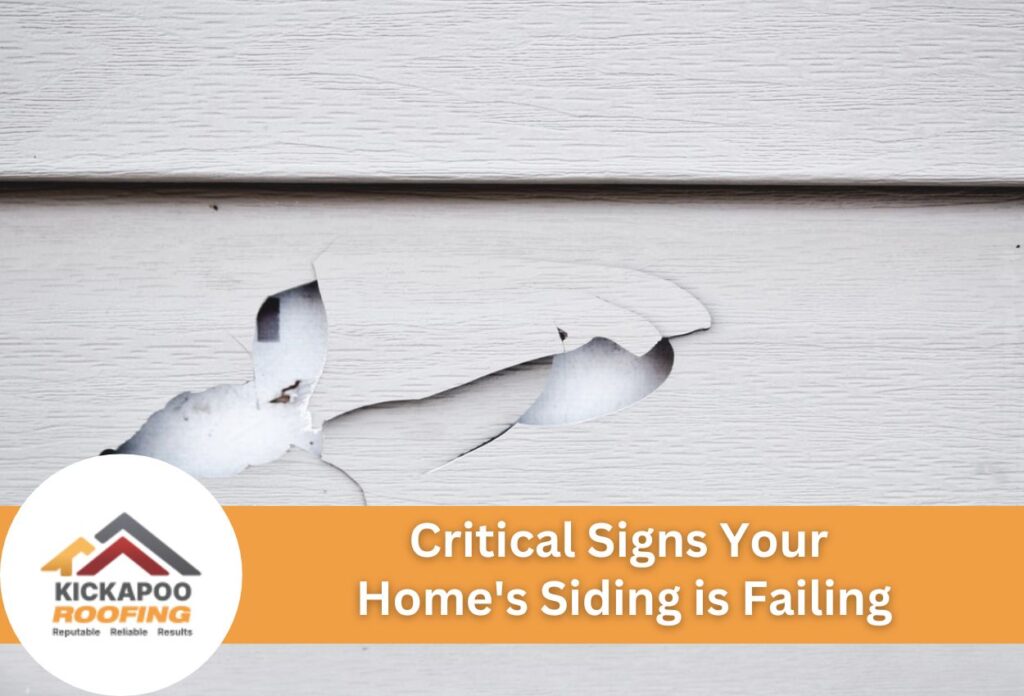
When inspecting your home’s exterior, visible cracks and holes in siding are among the most telling signs of failing siding that require immediate attention. Vinyl siding typically develops cracks due to impact damage or extreme temperature fluctuations common in Wisconsin winters. Horizontal cracks often indicate structural shifting, while vertical cracks may result from improper installation or thermal expansion.
Wood siding presents different warning signs, with small cracks frequently starting around knots or along grain patterns. These seemingly minor imperfections allow moisture in, leading to rot that compromises the entire panel. Fiber-cement siding, though more durable, can develop stress fractures at connection points that worsen over time.
Even pinhole-sized perforations in siding create entry points for moisture, which is particularly problematic across the Midwest’s freeze-thaw cycles. These small openings also invite destructive pests, including carpenter ants, termites, and rodents, that can establish colonies within your walls. Once inside, these pests accelerate siding deterioration while potentially damaging insulation and wiring.
Weather damage to house siding often begins with these minor defects that progressively worsen with each storm. Professional siding contractors can identify these early signs of siding deterioration and recommend appropriate repairs before your home suffers extensive damage.
Sign #2: Warping, Buckling, and Bubbling Issues
Warped or buckled siding represents clear signs of failing siding that Midwest homeowners should never ignore. In Wisconsin, Iowa, and Minnesota, moisture stands as the primary culprit behind siding deformation. When water seeps behind panels, it causes the material to expand unevenly, creating visible distortion across your home’s exterior. Improper installation, particularly insufficient gaps between panels that prevent natural expansion, significantly increases the risk of warping.
Temperature fluctuations common throughout our tri-state region place exceptional stress on exterior materials. During summer, siding absorbs heat and expands, while in winter, it contracts. This constant cycle eventually weakens even expertly installed siding. While all siding materials naturally expand and contract seasonally, concerning signs include panels that remain permanently warped or sections that appear wavy when viewed from an angle.
Bubbling or blistering siding indicates serious water infiltration issues that require immediate attention. These bubbles form when moisture becomes trapped between the siding and wall sheathing, causing the surface to separate and protrude outward. Unlike normal expansion that affects entire panels uniformly, bubbling appears as isolated raised areas and typically indicates that water has compromised the underlying structure.
Identifying these siding damage warning signs early prevents moisture from reaching your home’s framework and insulation, where it can cause thousands in structural damage and create ideal conditions for dangerous mold growth.
Sign #3: Fading, Peeling, and Paint Deterioration
Siding color fades over time due to continuous exposure to UV radiation, precipitation, and temperature fluctuations throughout Wisconsin, Iowa, and Minnesota. While some gradual fading is expected, excessive or uneven discoloration indicates your siding has reached the end of its protective capabilities. When color has faded by more than 30% from its original shade or appears blotchy, the protective UV-resistant layer has likely deteriorated, exposing the material to accelerated breakdown.
Siding materials show paint problems differently, but they all signal underlying issues. Wood siding typically exhibits peeling or flaking paint when moisture seeps behind the surface, pushing the paint outward. If your home requires repainting every few years, this suggests the siding itself is failing to repel moisture properly. Vinyl siding doesn’t require painting, so any chalking or powdery residue when touched indicates the material is breaking down at a molecular level.
Aluminum siding often develops a powdery oxidation layer as it ages, while fiber cement may show paint adhesion issues if moisture penetrates its surface. These exterior siding problems aren’t merely cosmetic concerns — they represent the breakdown of your home’s protective barrier. When you notice these signs of siding deterioration, it’s essential to have a professional assessment to determine whether repairs or replacement will provide the most cost-effective long-term protection.
Sign #4: Moisture and Mold Problems Behind Siding
When moisture infiltrates behind your home’s siding, it creates ideal conditions for mold growth that threatens both your property’s structure and your family’s health. Water stains appearing on interior walls, particularly near windows or corners, often indicate moisture has penetrated your siding and reached the interior drywall. These stains typically appear as yellowish or brownish discoloration that expands over time.
Persistent musty odors, especially after rainfall, serve as a critical warning sign that moisture has become trapped behind your siding. This creates the perfect conditions for mold development, which thrives in the humid summer conditions that are common in Wisconsin, Iowa, and Minnesota. If family members experience increased allergy symptoms or respiratory issues when at home, failing siding may be allowing dangerous mold spores to enter your living space.
Visible mold or mildew on exterior surfaces indicates a serious problem has already developed. Black, green, or white patches growing on siding joints or where siding meets trim suggest moisture has gotten into your home’s envelope. This fungal growth weakens structural elements by breaking down wood fibers and can cause serious health complications, particularly for those with asthma or compromised immune systems.
Professional siding contractors can identify moisture infiltration points and recommend appropriate remediation before mold causes extensive damage to your home’s structure or impacts your family’s health.
Sign #5: Increased Energy Bills and Indoor Comfort Issues
Unexplained spikes in your utility bills often serve as a hidden indicator of failing siding that many homeowners overlook. When your siding develops cracks, warps, or separates from the structure, your home’s thermal envelope becomes compromised, allowing heated or cooled air to escape. Wisconsin, Iowa, and Minnesota residents typically notice this problem most during extreme temperature months when heating systems struggle to maintain comfortable temperatures despite running constantly.
Pay attention to rooms that suddenly feel drafty or develop noticeable cold spots near exterior walls. These temperature inconsistencies indicate that your siding no longer provides proper insulation against the elements. Many homeowners first notice this issue in older sections of the home or areas exposed to prevailing winds. If you find yourself constantly adjusting the thermostat to maintain comfort, your siding may be failing to perform its essential insulation function.
Humidity issues provide another important warning sign of siding deterioration. Properly functioning siding creates a moisture barrier that prevents outdoor humidity from entering while allowing internal moisture to escape. When this system fails, you may notice condensation on windows, damp spots on walls, or unusual humidity levels that fluctuate with outdoor conditions. These moisture imbalances not only create discomfort but also establish conditions for mold growth within wall cavities.
Professional siding contractors can conduct thermal imaging assessments to identify specific areas where your home’s exterior envelope has been compromised, allowing for targeted repairs before energy costs spiral further.
When to Repair vs. When to Replace Your Siding
Deciding between repairing damaged sections or completely replacing your home’s siding depends on a few things. If damage is isolated to a small area, generally less than 20% of the total siding, repairs may be sufficient. However, widespread signs of failing siding across multiple walls typically indicate systemic problems that repairs can’t adequately address. Consider your siding’s age — materials approaching the end of their expected lifespan generally warrant replacement even if damage appears limited.
Professional siding inspections can help you make this important decision. During an inspection, qualified Midwest contractors should examine not just visible siding surfaces but also investigate beneath damaged sections to assess the condition of underlayment, insulation, and structural elements. They’ll check for moisture intrusion at seams, evaluate flashing around windows and doors, and inspect for signs of water damage to interior walls.
When meeting with contractors, ask about the services they offer for your specific siding material, whether they have found any structural concerns beyond cosmetic issues, and how they match repaired areas to your existing siding. Request an explanation of how weather damage to house siding has progressed and whether repairs would effectively prevent further deterioration. Wisconsin, Iowa, and Minnesota homeowners should also inquire about insulation options if a complete replacement is recommended, as modern siding systems offer significantly improved energy efficiency.
Protect Your Home with Kickapoo Roofing’s Expert Siding Services
If you’ve noticed any of the signs of failing siding described above, don’t wait for the damage to worsen. Protecting your home against the harsh Midwest weather starts with maintaining a solid, intact exterior. Visible cracks, warping, or moisture issues are more than just cosmetic flaws — they can lead to significant structural damage and expensive repairs if left unaddressed.
At Kickapoo Roofing, we specialize in diagnosing and resolving siding issues efficiently and effectively. Whether it’s a simple repair or a full siding replacement, our team guarantees that your home remains beautiful and well-protected. Don’t compromise on your home’s safety and curb appeal. Call us today at (608) 352-8688 to schedule a professional inspection and get a reliable solution tailored to your home’s specific needs.